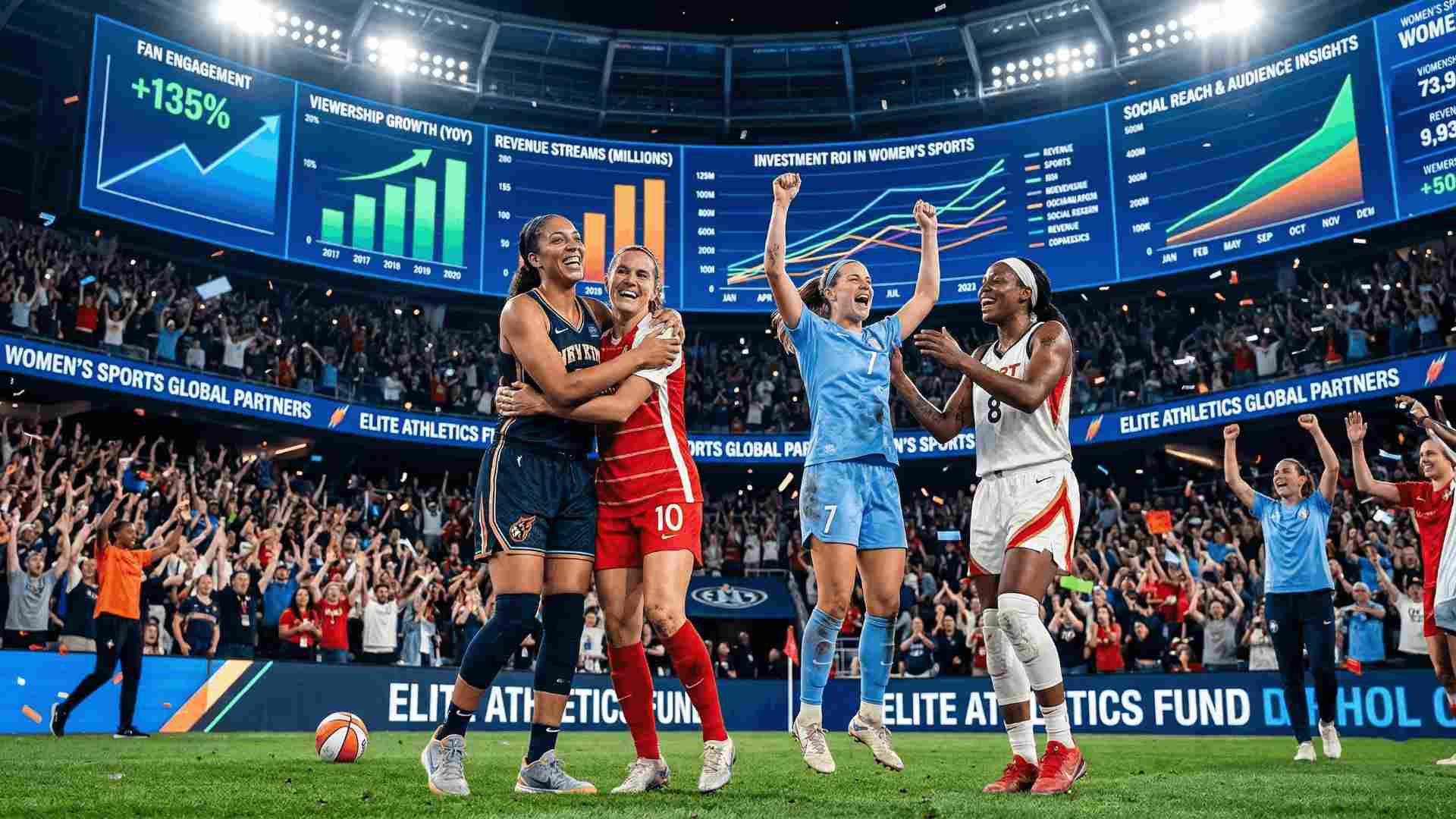
Investors and brands are waking up to a massive valuation gap in the global athletic market. While men’s leagues have long dominated the financial conversation, the ROI of women’s sports is now proving to be a superior vehicle for growth. Recent data from 2026 highlights a startling trend: women’s basketball and soccer are delivering brand impact that far exceeds their current market price. As the industry moves toward gender equity, the focus is shifting from “charity” to “capital efficiency.”
The Engagement Advantage: 3.7x Higher Impact
The most compelling evidence for the shift in ROI lies in digital interaction. While traditional influencers and male athletes often struggle with saturated markets and “scroll-past” fatigue, women athletes are seeing unprecedented connection with their audiences. Data shows that women’s basketball players and other female athletes deliver social media engagement rates up to 3.7x higher than traditional influencers.
This isn’t just about likes or shares; it’s about a deep, community-driven loyalty. Fans of women’s sports are more likely to support the brands that support their favorite players. The FanPact website platform is helping to bridge this gap by connecting these highly engaged fanbases with brands looking for authentic resonance. When a brand partners with a female athlete, they aren’t just buying impressions; they are gaining access to a dedicated ecosystem that values advocacy and representation.
Closing the $2.5 Billion Monetization Gap
Despite the explosive growth in viewership, a significant “monetization gap” remains. McKinsey and S&P Global reports suggest that women’s sports receive only a fraction of institutional revenue compared to men’s leagues. However, this discrepancy is exactly why the ROI is so high.
Lower entry costs for sponsorships, combined with massive audience growth, create a “value investing” scenario. Investors are essentially buying into a high-growth asset at a “pre-peak” price. The 2026 data confirms that while the media rights and ticket sales are still catching up, the consumer intent is already there. Brands that enter the space now are securing long-term loyalty before the market fully corrects its pricing.
The Gen Z Influence
The surge in value is largely driven by Gen Z and Millennial consumers. This demographic views sports through the lens of social impact and equity. They don’t just watch the game; they follow the journey. This audience is digitally native and highly skeptical of traditional advertising, yet they respond powerfully to the storytelling inherent in women’s sports.
By leveraging tools like FanPact, organizations can quantify this sentiment and prove that the community-led growth of women’s leagues is more sustainable than the top-down broadcast models of the past. As the Olympics and World Cups continue to break viewership records, the momentum is no longer a “moment”. It is a permanent movement.
The Future of Sports Investment
The transition toward gender equity in sports is inevitable. As institutional revenue begins to mirror the actual engagement rates of the fans, those who invested early will see the greatest returns. The 3.7x engagement multiplier suggests that women athletes are the most undervalued assets in the current media landscape.
Moving forward, the industry will see a rebalancing of media rights and sponsorship tiers. For brands, the question is no longer “Why invest in women’s sports?” but “How much longer can we afford to ignore this ROI?”
Conclusion
The shift in the sports business landscape is clear. Women’s sports are no longer a niche market; they are an ROI powerhouse. By capitalizing on the high engagement rates of women’s basketball and other leagues, and using platforms FanPact to measure success, investors can turn social capital into financial growth. The gender equity shift is here, and it is rewriting the playbook for sports monetization.
Also read: A Day in the Life of a Student-Athlete: Balancing Performance and Academics
FAQs
1. Why is the ROI of women’s sports higher than that of men’s?
Lower initial sponsorship costs paired with significantly higher fan engagement rates create a more efficient return on every dollar spent.
2. How do social media engagement rates for women athletes compare to those of others?
Female athletes, particularly in basketball, see engagement rates up to 3.7x higher than traditional influencers and many of their male counterparts.
3, What is the “monetization gap” in women’s sports?
It refers to the $2.5 billion discrepancy between the high viewership/engagement of women’s sports and the lower revenue generated from media rights and sponsorships.
4. How does Fanpact contribute to the growth of women’s sports?
FanPact provides a platform that connects highly engaged fanbases with brands to maximize the impact of sports sponsorships.
5. What role does Gen Z play in the rise of women’s sports?
Gen Z prioritizes social equity and authentic storytelling, making them the primary demographic driving the surge in women’s sports viewership.